New Restrictions on What You Can Bring into Canada
Keep up to date with the changes.
By Erin Rody


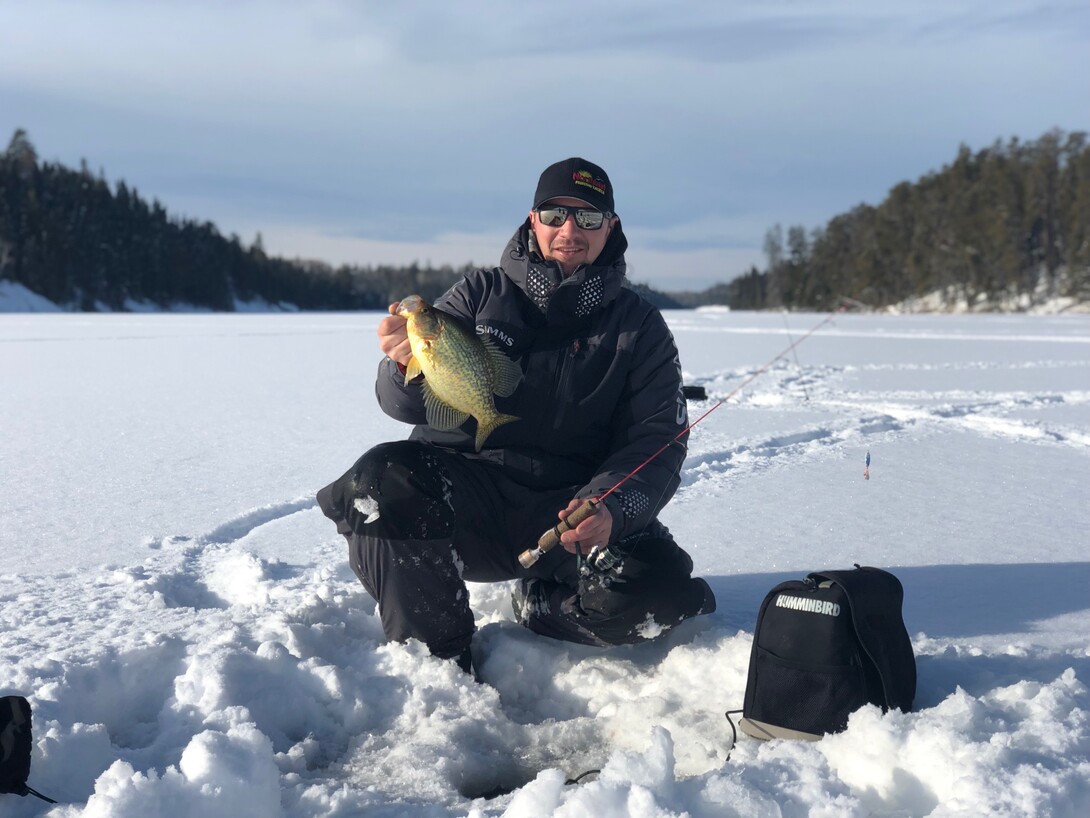
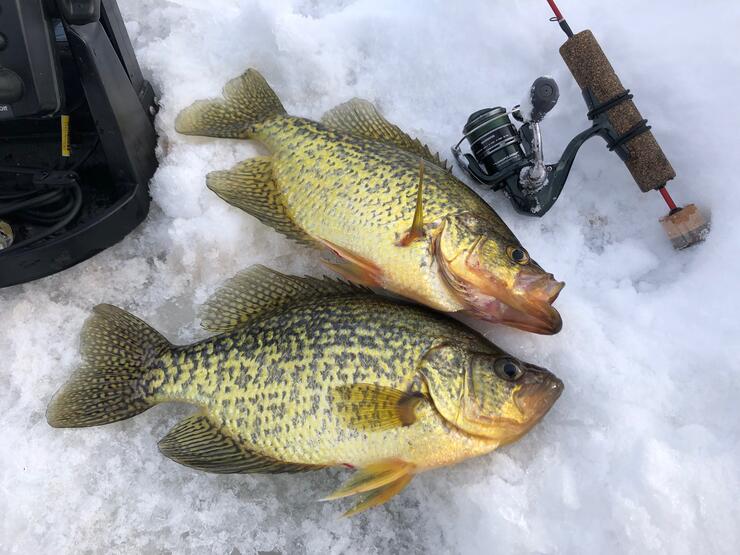
When anglers think about crappie fishing, Northwestern Ontario’s Sunset Country region is probably not the first place that comes to mind, but I’m here to tell you that it should be. While they are not native to our part of the world, crappies are widespread across the southern portion of Sunset Country, maybe a by-product of bass stocking a century ago? They are here now and are a popular target for anglers throughout the year, particularly in the winter. Across the region, we have some fantastic opportunities for crappies.
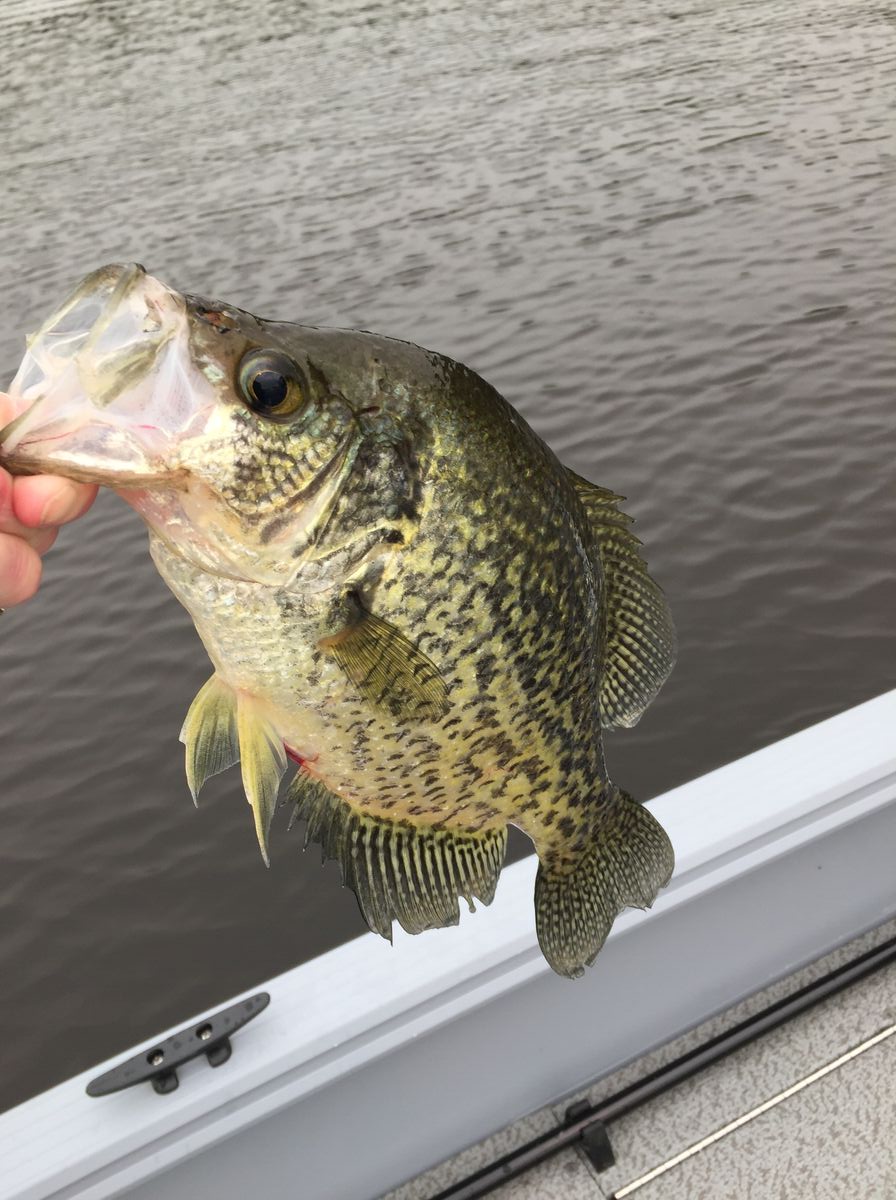
When people ask me where to find crappies in the winter, the best advice I can share is to look in the deeper holes in the lakes or bays where they live. Sounds simple, right? Crappies show up in shallow water in the spring to spawn, but outside of that, they spend the rest of the year in deeper water. In the summer, they suspend around deeper weed beds where they do a good job avoiding anglers, but in the fall, they show up in the deep holes where they’ll stay through the winter.
Many of the bigger waterbodies hold populations of crappies—Lake of the Woods, Rainy Lake, Wabigoon Lake, the Winnipeg River, and Cedar Lake. And then dozens of smaller lakes have populations as well. On most of these waters, crappies group up and show up in predictable winter holes.
Across the region, some resorts stay open in the winter to cater to ice anglers and crappie anglers specifically, especially around the Nestor Falls area on Lake of the Woods. Some of these outfits that specifically target crappies will know where to find them under the ice. Some of these resorts may even offer permanent shelters in prime locations if you want to fish in warm comfort. Many of the smaller lakes require snowmobiles or ATVs to access them, but some of these waters offer the best fishing. My friends and I try a new lake or two every winter for crappies, and every once in a while, we find a hidden gem. The guides and resort folks are the ones who know where these are.
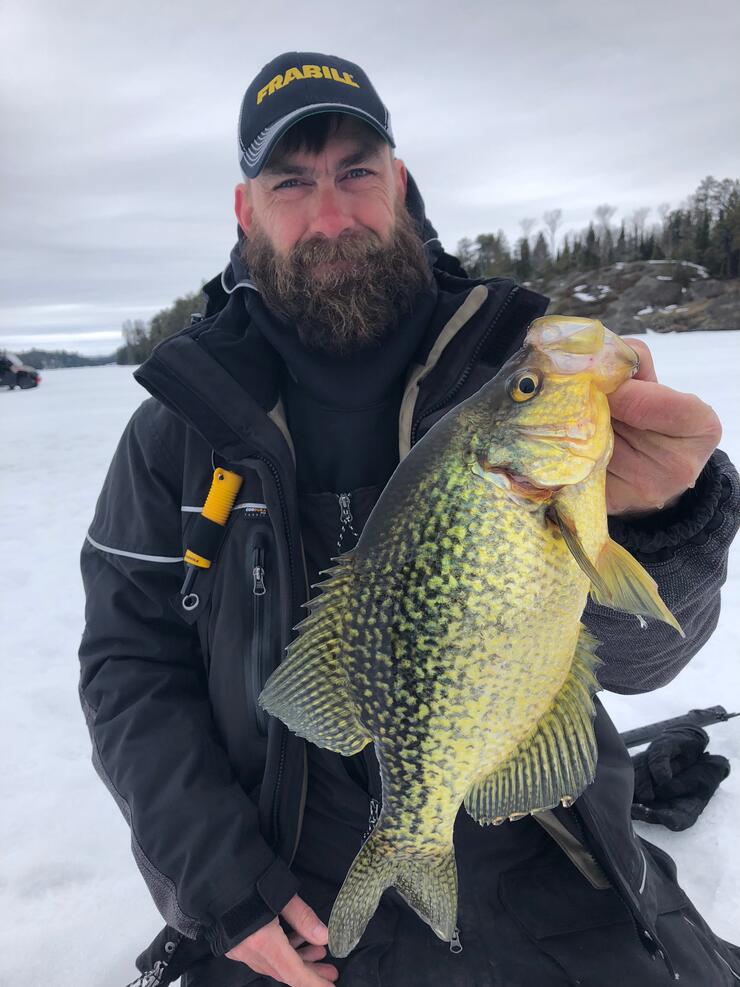
The good thing for anglers is that crappies group up in the winter, so when you find them, you have probably seen a significant portion of the population in that waterbody, all together. This can be detrimental to the fish because some anglers still have a hard time releasing crappies. A few years back, the daily limit was reduced to ten per day, which is still high if you are keeping big crappies, but it has helped. Crappies are slow-growing in this extreme northern part of their range. Those big fish are eight to ten years old; they simply don’t grow as quickly as they do farther south. This makes them the easiest fish that we have to clean out of a lake or area.
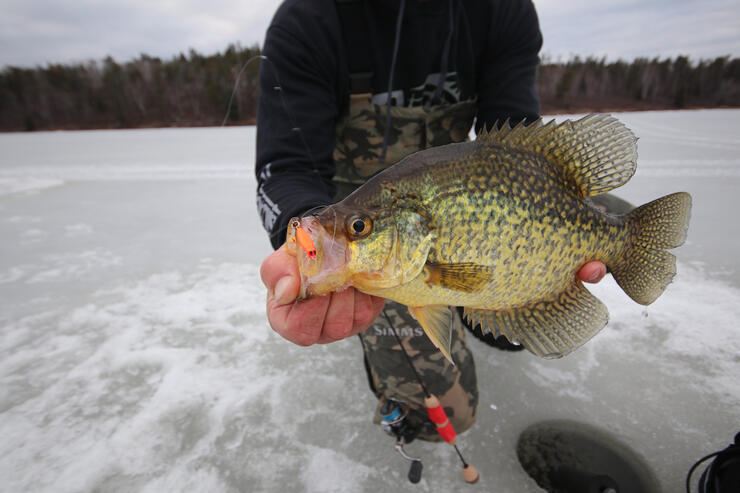
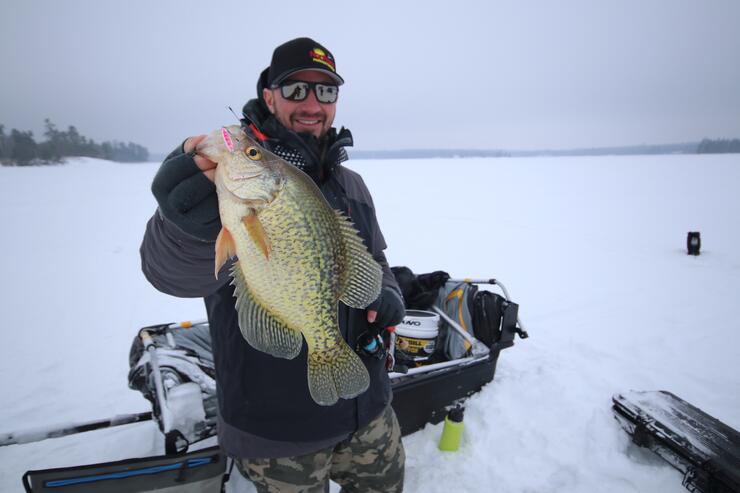
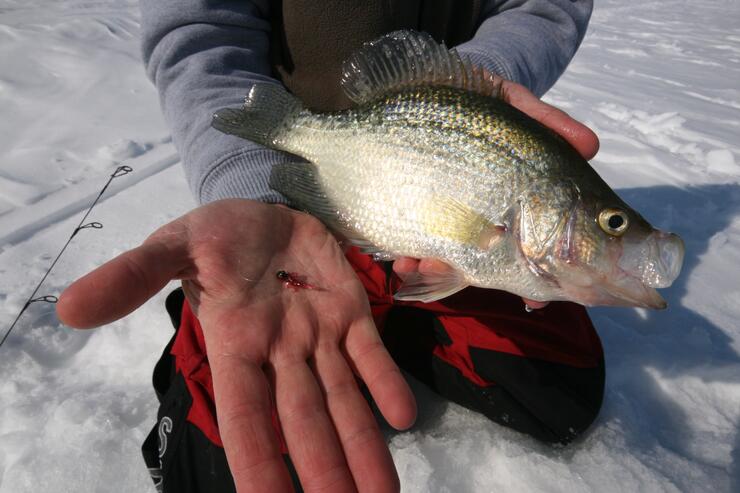
If you get on a crappie hole that hasn’t been fished too hard by other anglers, you can expect to catch big fish in the 14” plus range. What we see is that once crappies are under too much pressure, their size structure decreases quickly, so when you get into a good spot, keep a few to eat and release the rest.
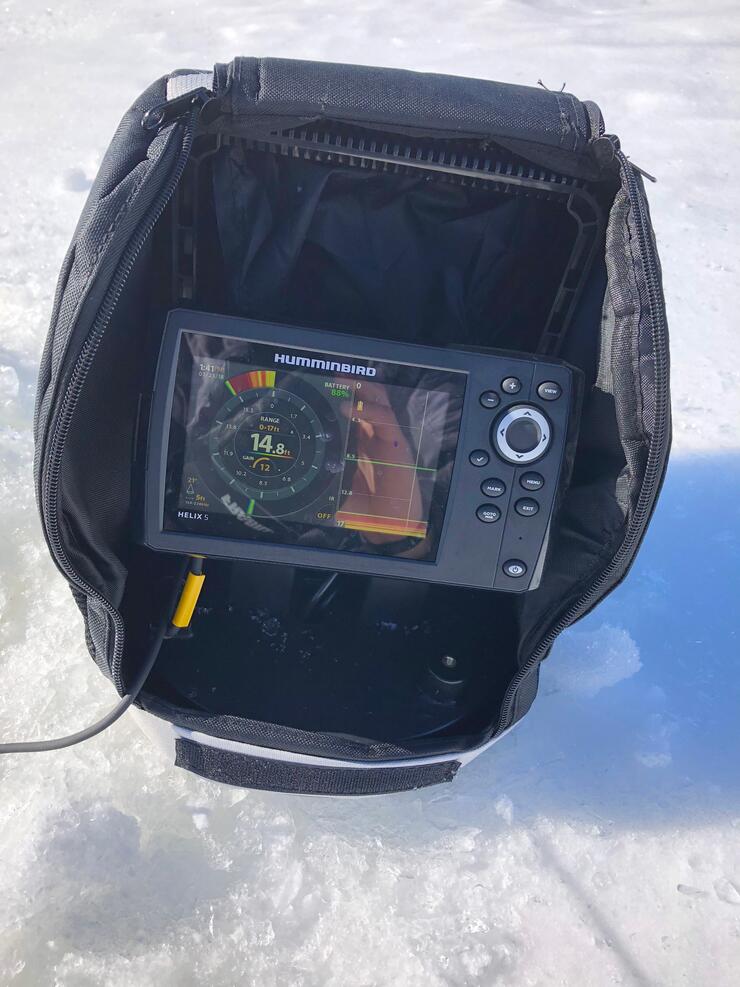
Finding crappies under the ice is the biggest challenge that anglers face. Once you see them, they are usually easy to catch. As I mentioned above, electronics are critical because crappies almost always suspend at least a few feet above the bottom. Crappies are also known to look up because of the position of their eyes, so all anglers should know that you will catch more fish if you can keep your bait just slightly above them.
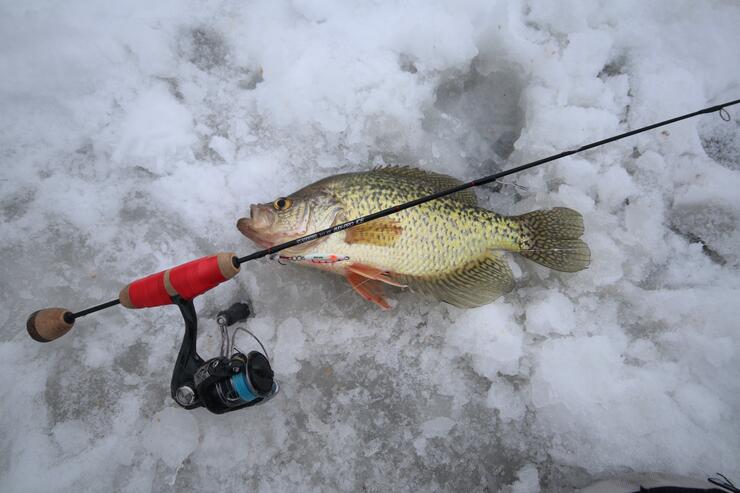
When it comes to choosing baits to drop down the hole, the first consideration for me is that I want a spoon or jig with a little bit of weight to it—so it will get down quickly to fish that I mark on my sonar. This doesn’t mean big, oversized walleye jigs, I just mean crappie baits that are on the bigger side so you aren’t fighting with your line to get it down the hole.
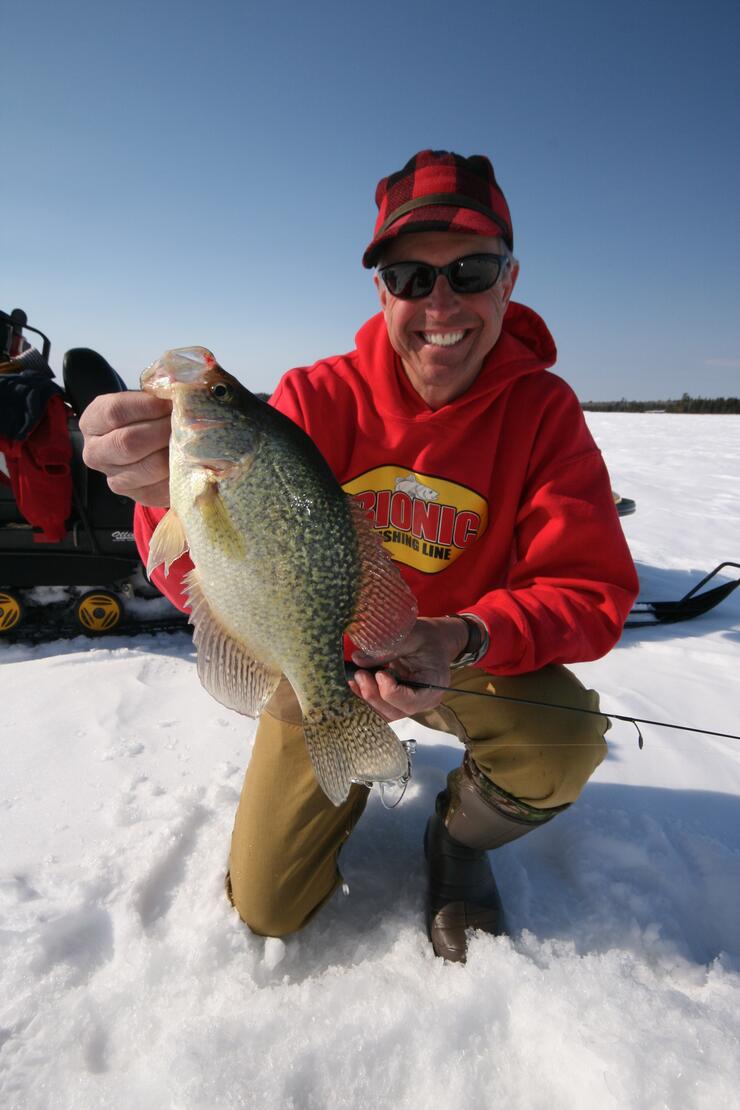
A small jig tipped with a live minnow will catch most crappies that you put it in front of, but, to be honest, there is no need for meat to catch crappies. A small spoon tipped with soft-plastic maggot or larvae imitators is one of my top producers. Of course, like with all fishing, there are days when the bite is tougher, and you need to bring a little bit of finesse.
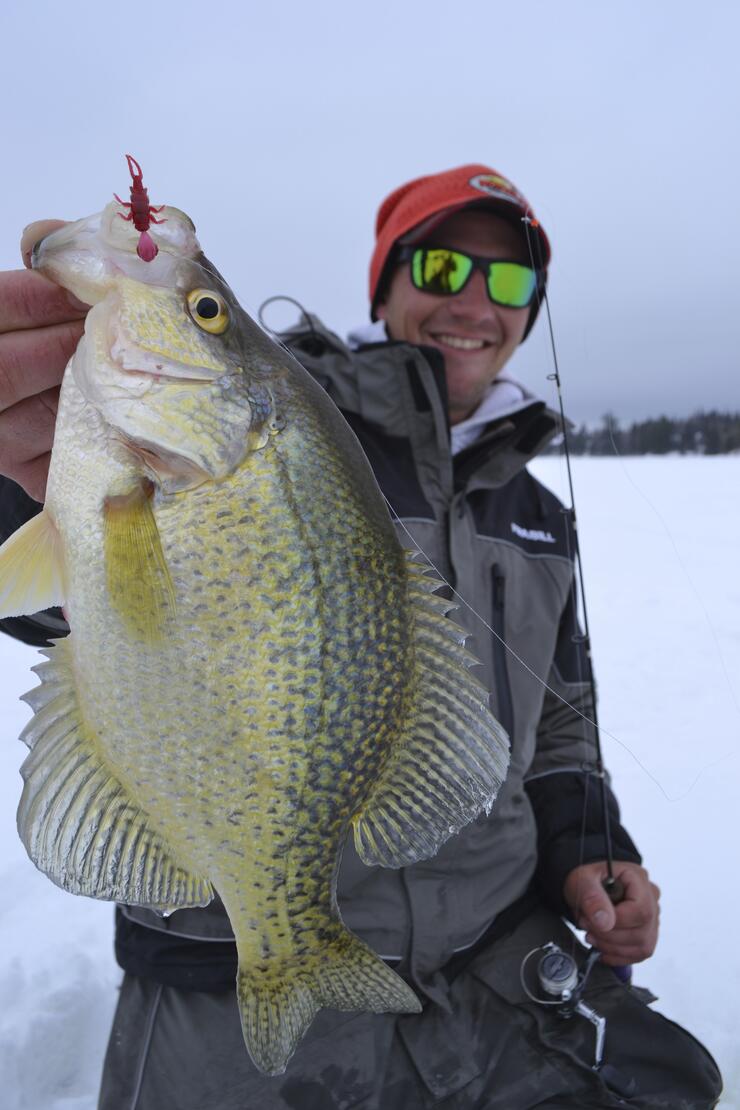
My backup rig is a jig tipped with a soft-plastic bug imitator. The colour of your bait can make a difference on some days. I carry a variety of dark colours, some natural white, as well as a few bright-coloured baits. For some reason, pink is always a good one for crappies on most waters in Northwest Ontario.
If you’re interested in catching some crappies through the ice, we have some fantastic options across the region for both big fish and numbers. They can be seen throughout the season, but early in the season gives you the first crack at some of the more popular areas, while late in the season, you are likely to enjoy nicer weather.